LARGE CAPACITY PRESSURE SAFETY VALVE

EF1415L
  • Engineered for large flow and high-capacity relief requirements
  • API / ASME project configuration
  • Application-specific sizing, materials and documentation
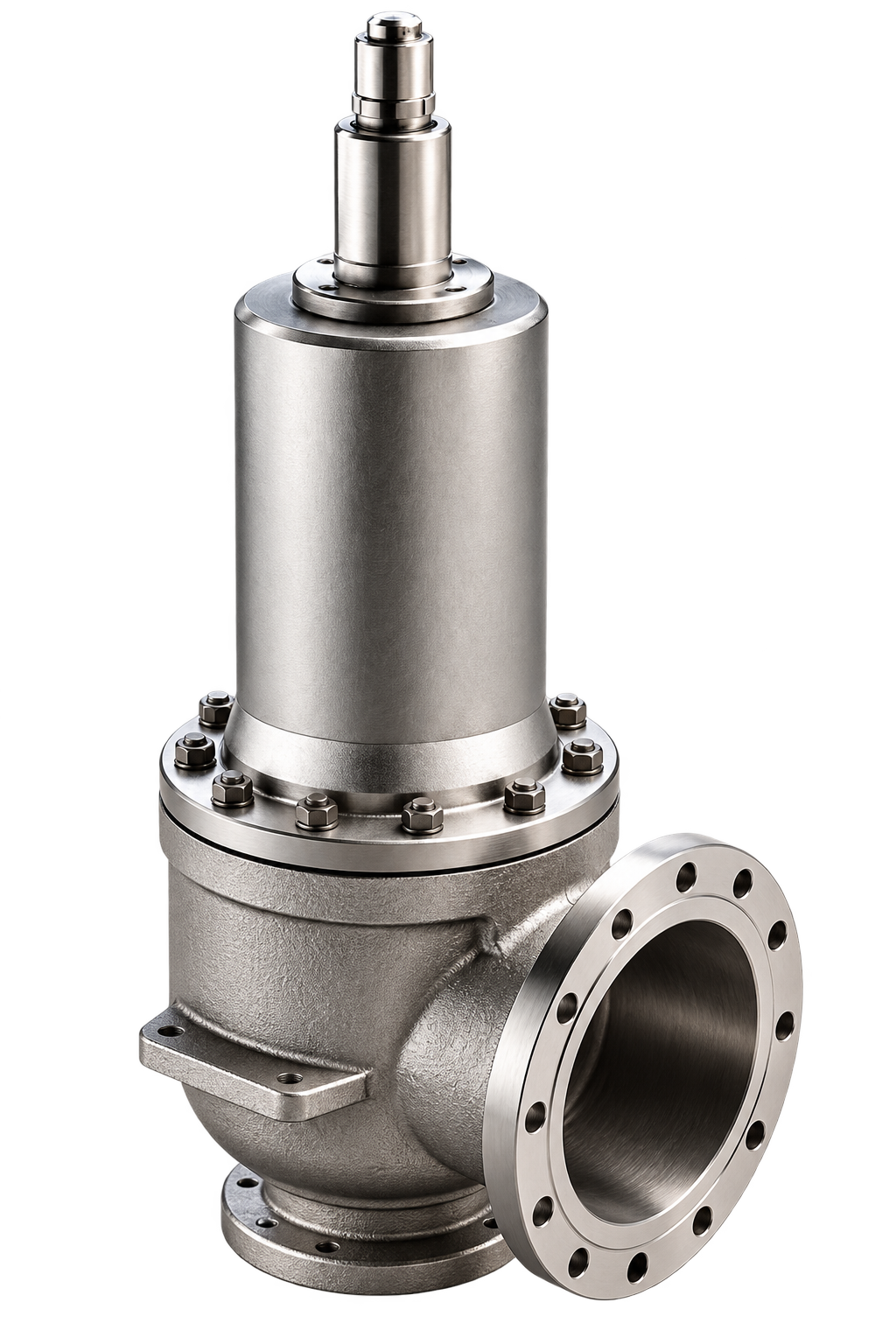
Large capacity pressure safety valve engineered for high-flow relief applications

Applications

Configured Service Scope
Chemical
Gas
Petrochemical
Water

Key Specifications

CAPACITYEngineered for large flow requirements
NOMINAL SIZES10" x 14" / 12" x 16" / 16" x 20" / 20" x 24"
PRESSURE RATINGSANSI Class 150 / 300
TEMPERATURE RANGE-196°C to +400°C
DESIGN BASISAPI 520 / 521 / ASME BPVC Large sizes beyond API 526
MATERIALSWCB / WC6 / WC9 / CF3M / CF8M / A8905A
CONNECTIONSFlanged or welded, according to project requirements

Selection & RFQ Assistant

Help us identify the right solution
Guided request

Build a technical RFQ line with service data, sizing conditions, accessories and documents.

01
Service
02
Process
03
Options

FAQs

The EF1415L is an engineered pressure safety valve for applications requiring large relieving capacities beyond typical standard catalogue configurations. It can be considered for large pressure vessels, process equipment, relief systems and other high-capacity duties where the required flow determines a large relieving area. Final valve selection is based on the actual process and relieving conditions.
A relatively low set pressure does not necessarily mean that only a small safety valve is required. For gases and steam, lower-pressure conditions can involve large volumetric flows, and a process may require a substantial mass flow to be relieved. This can lead to a large required relieving area and therefore to a large valve configuration. The valve must therefore be sized from the required relieving duty rather than selected from pressure alone.
Large-capacity pressure safety valves can be considered where the protected equipment or system requires a high relieving flow. Typical application areas can include: - Large pressure vessels - Process equipment - Gas and vapour systems - Large steam systems - Relief headers - Pressure-reducing systems - Water-system air vessels or surge vessels where overpressure protection is required The specific valve configuration must always be determined from the actual relieving scenario.
Yes. Large-capacity safety valves can be considered for large steam headers, exhaust steam systems and reduced-pressure steam services where the required relieving capacity leads to a large valve size. These conditions can occur in sugar mills and other industrial plants with extensive steam-generation and distribution systems. The EF1415L should nevertheless be selected from the actual steam flow, set pressure, relieving conditions and applicable project requirements rather than from the industry name alone.

ABOUT EF1415L

The EF1415L Large Capacity Pressure Safety Valve is an engineered pressure relief solution developed for demanding industrial applications with large flow requirements. Based on an API / ASME design approach, each valve is configured for the required relieving capacity, process conditions and project specification.

The EF1415L supports the protection of large pressure vessels, process equipment, relief headers and high-capacity systems. Valve size, pressure class, materials, trim and accessories are defined through an application-specific engineering review using the required set pressure, relieving pressure, back pressure, fluid properties and operating temperature.

This project-engineered approach combines high-flow pressure relief performance with manufacturing, inspection, documentation and supply support for technically demanding international projects.

Frequently Asked Questions

The EF1415L is an engineered pressure safety valve for applications requiring large relieving capacities beyond typical standard catalogue configurations. It can be considered for large pressure vessels, process equipment, relief systems and other high-capacity duties where the required flow determines a large relieving area. Final valve selection is based on the actual process and relieving conditions.
A relatively low set pressure does not necessarily mean that only a small safety valve is required. For gases and steam, lower-pressure conditions can involve large volumetric flows, and a process may require a substantial mass flow to be relieved. This can lead to a large required relieving area and therefore to a large valve configuration. The valve must therefore be sized from the required relieving duty rather than selected from pressure alone.
Large-capacity pressure safety valves can be considered where the protected equipment or system requires a high relieving flow. Typical application areas can include: - Large pressure vessels - Process equipment - Gas and vapour systems - Large steam systems - Relief headers - Pressure-reducing systems - Water-system air vessels or surge vessels where overpressure protection is required The specific valve configuration must always be determined from the actual relieving scenario.
Yes. Large-capacity safety valves can be considered for large steam headers, exhaust steam systems and reduced-pressure steam services where the required relieving capacity leads to a large valve size. These conditions can occur in sugar mills and other industrial plants with extensive steam-generation and distribution systems. The EF1415L should nevertheless be selected from the actual steam flow, set pressure, relieving conditions and applicable project requirements rather than from the industry name alone.
Yes. Where an exhaust steam or low-pressure steam header requires overpressure protection and the required relieving flow is high, a large-capacity safety valve may be appropriate. Low pressure combined with a large steam flow can require a substantial relieving area. The required valve size must be established by sizing using the actual steam conditions and required relief capacity.
It can be considered where the surge vessel or associated compressed-air system requires protection against overpressure and the required relieving duty falls within the suitable EF1415L configuration. This application should not be confused with hydraulic surge protection. The surge vessel itself is used to manage pressure transients or water hammer, while the safety valve protects the pressurised vessel or air system against excessive pressure. The required relief capacity, pressure conditions and vessel design requirements must therefore be evaluated independently.
Yes. A pressure-reducing system can create a relief requirement if downstream equipment is designed for a lower pressure and a credible failure scenario could expose it to excessive pressure. Where the resulting required relief flow is large, a large-capacity safety valve may be required. The valve must be sized for the applicable relieving scenario rather than simply matched to the pressure-reducing valve or pipeline size.
Yes, a large-capacity safety valve can discharge into a common vent or relief header when the complete discharge system and resulting backpressure are compatible with the selected valve configuration. Header pressure, built-up backpressure, simultaneous relieving scenarios and discharge piping must therefore be considered during engineering. A valve should not be selected independently of the downstream system when it discharges into a common header.
No. A pressure safety valve is sized according to the required relieving capacity and applicable pressure-relief calculation, not simply by matching the nominal pipe diameter. The safety valve inlet may therefore be smaller than the protected pipeline or equipment connection, provided that the inlet arrangement and complete relief system comply with the applicable requirements. In very high-flow applications, however, the required relieving area itself can lead to very large valve connections.
No. Connection size and relieving capacity are related but they are not the same parameter. The required relieving area is determined from the process conditions, fluid properties, set and relieving pressure and required capacity. The corresponding valve and connection sizes are then selected around that requirement. A large pipeline therefore does not automatically require an equally large safety valve, and a relatively low-pressure application can still require a large valve when the relieving flow is high.
The current EF1415L range lists the following large-capacity configurations: - 10" x 14" - 12" x 16" - 16" x 20" - 20" x 24" The published pressure classes are ANSI Class 150 and Class 300. The applicable combination of size, pressure class, material and connections must be confirmed against the required process conditions and project specification.
In some pressure-relief systems, the required capacity can be distributed between more than one safety valve, subject to the applicable design code and system requirements. Whether one large valve or several smaller valves are preferable depends on the required capacity, set-pressure philosophy, available connections, operating scenarios, discharge system and project requirements. The decision should therefore be made as part of the overall pressure-relief design rather than solely from valve availability.
Large relieving flows can produce significant pressure losses in inlet and discharge piping. Excessive inlet pressure loss or backpressure can affect safety-valve operation and available relieving performance. For this reason, large-capacity PSV selection should consider the complete inlet and outlet system, particularly where long discharge lines or common relief headers are involved.
The main information normally required includes: - Process fluid - Required relieving capacity - Set pressure - Relieving pressure or allowable overpressure - Backpressure - Operating and relieving temperature - Fluid properties - Inlet and outlet connection requirements - Material requirements - Applicable code and project specification Inspection, testing and documentation requirements should also be identified during the RFQ stage.
The EF1415L is developed around an API / ASME project approach, referencing API 520, API 521 and ASME BPVC for the applicable pressure-relief engineering requirements. Its published large-size configurations extend beyond the dimensional scope of API 526, so the final valve is configured according to the actual project and relieving requirements.
The EF1415L is a project-engineered large-capacity valve. Delivery time therefore depends on the required size, pressure class, material, quantity, configuration, testing and project-documentation requirements. The applicable delivery time is confirmed individually with each quotation.
Yes. The EF1415L is intended for project-engineered supplies where sizing, manufacturing, inspection and documentation form part of the defined project scope. Depending on the agreed requirements, inspection, testing, material certification, drawings and project documentation can be incorporated into the supply. Specific technical, quality, inspection and documentation requirements should preferably be identified during the RFQ stage.