Flame arresters are critical safety devices in installations handling flammable gases or vapours. Their job is to stop flame propagation and help protect tanks, vessels, vent systems and process piping from ignition events that could otherwise spread through the installation.
Choosing the right flame arrester is not only a matter of line size. The final selection depends on installation type, flame propagation mode, explosion group, materials and applicable ATEX requirements.
Need help reviewing a real application? Our engineering team can help you define the correct flame arrester type according to process conditions, installation layout and compliance requirements.
Why flame arrester selection matters
A flame arrester is designed to stop a flame front by dissipating heat through its internal flame arresting element. That element cools the flame below ignition temperature and helps prevent the flame from travelling into the protected equipment or piping system.
In practice, correct selection matters because different installations are exposed to different ignition scenarios. The same device is not automatically suitable for every vent outlet, tank connection or in-line piping application.
End-of-line vs in-line flame arresters
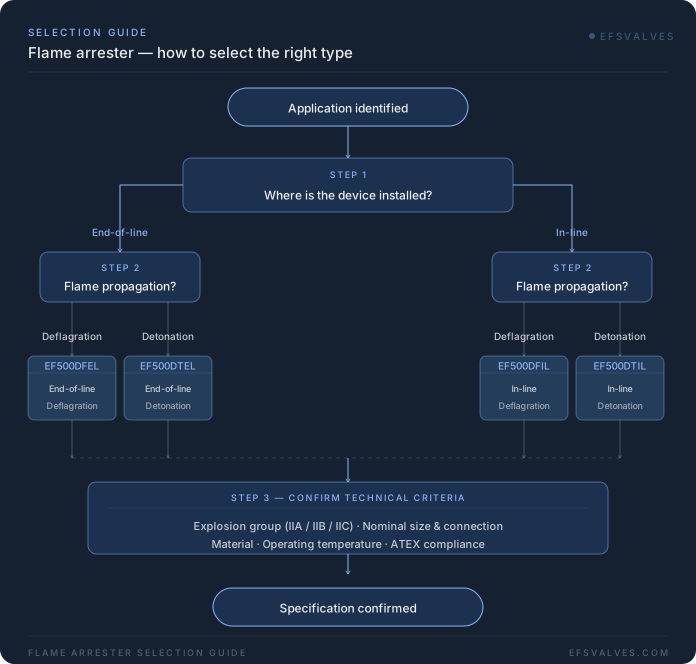
One of the first questions is whether the installation requires an end-of-line or an in-line flame arrester.
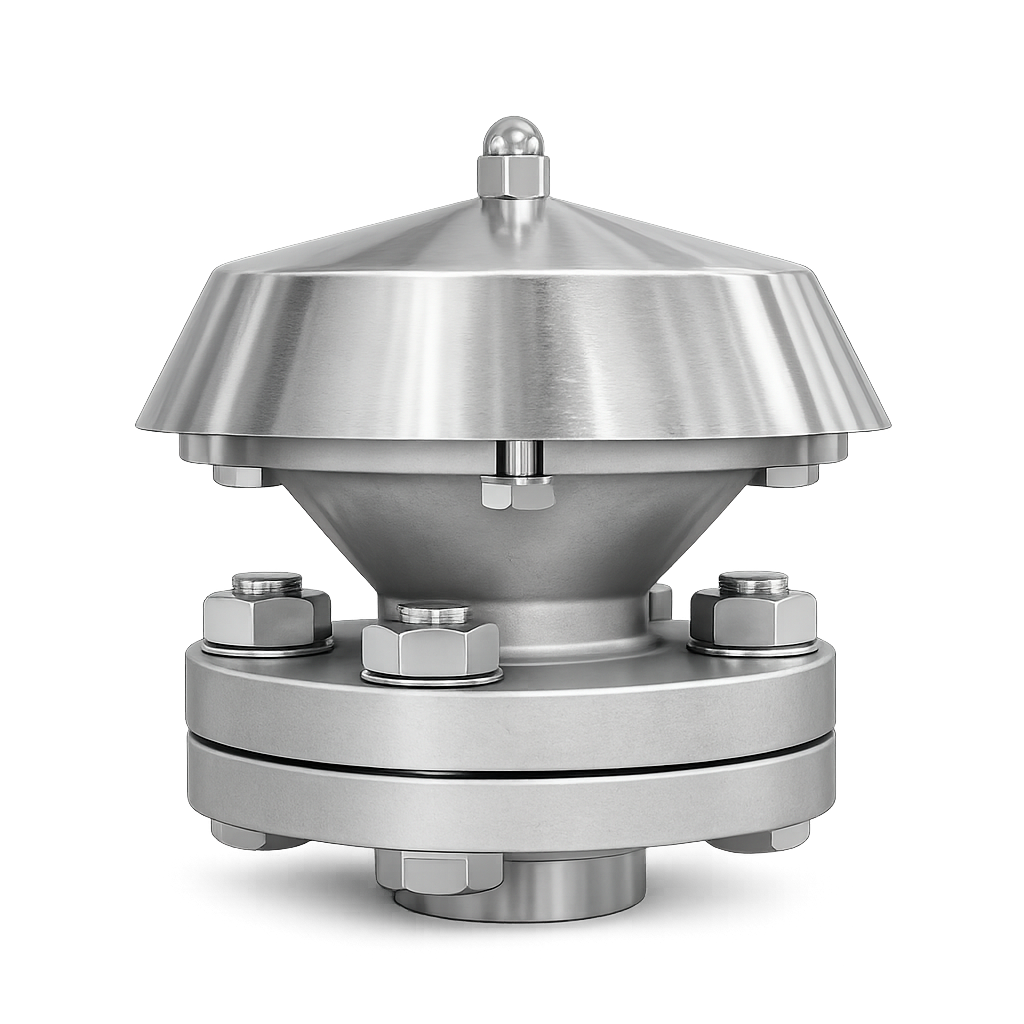
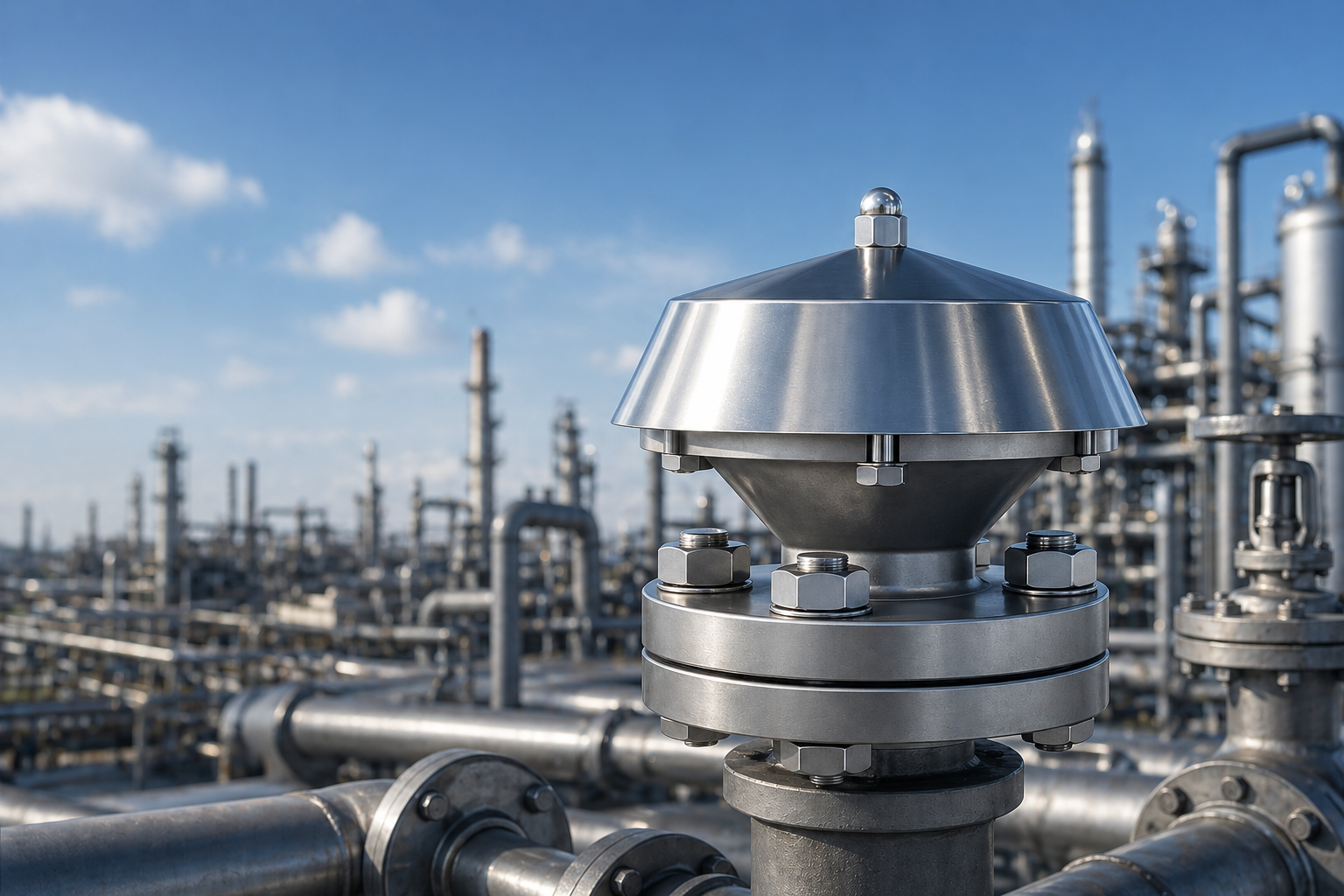
End-of-line flame arresters are typically installed at the outlet of vents or open discharge points, where the device protects the installation from external ignition events.
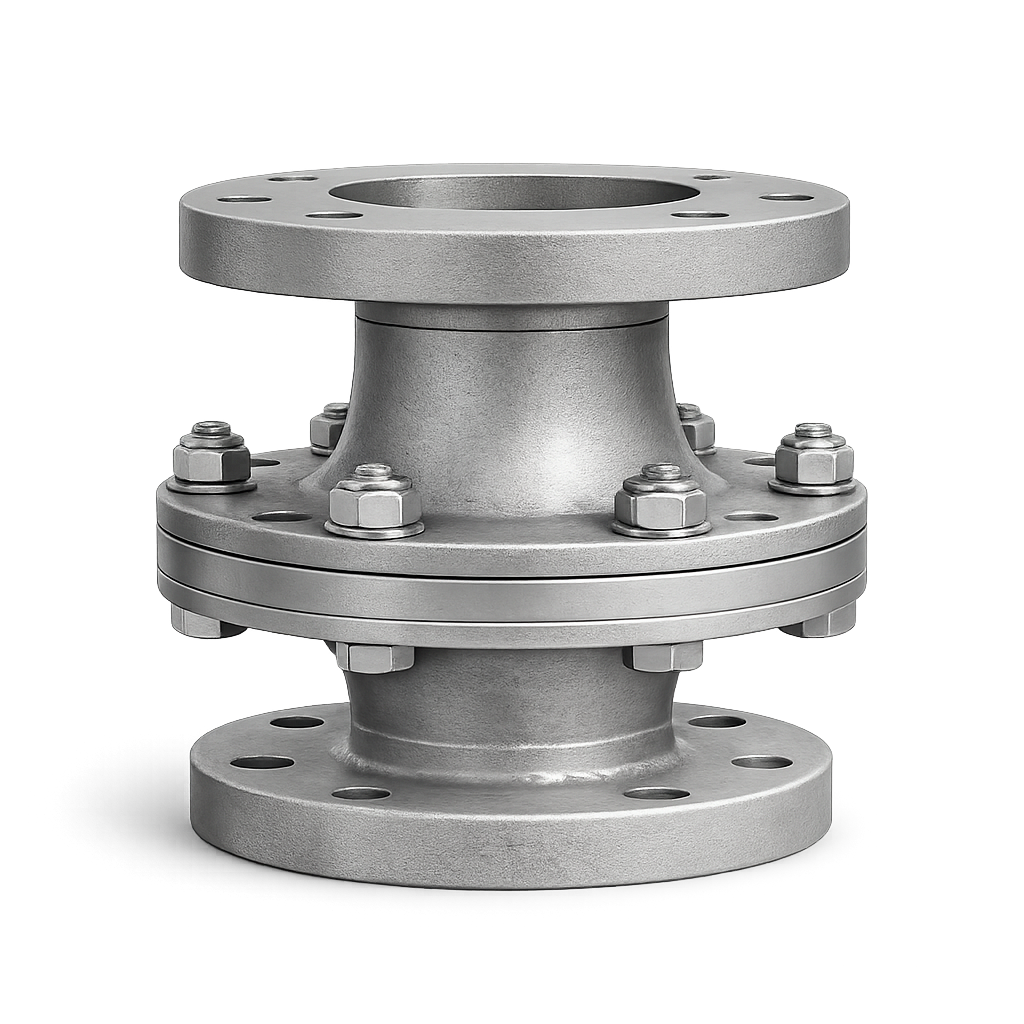
In-line flame arresters are installed within the piping system itself, where the device must stop flame propagation through the process line under defined operating conditions.
This distinction is important because the installation position affects the expected flame behaviour, pressure conditions and final device configuration.
Deflagration vs detonation protection
The next key decision is whether the application requires protection against deflagration or detonation.
- Deflagration flame arresters are intended for flame fronts propagating at subsonic speed.
- Detonation flame arresters are designed for more severe flame conditions associated with high-pressure shock waves and supersonic flame fronts.
The correct choice depends on the installation layout, process configuration and expected mode of flame propagation. When there is any doubt, the application should always be validated against the relevant process data and engineering criteria.
Which inputs are needed to define the correct flame arrester
To identify a suitable flame arrester, the following inputs are typically required:
- Installation type: end-of-line or in-line
- Expected flame propagation: deflagration or detonation
- Explosion group: such as IIA, IIB or IIC
- Nominal size and connection type
- Gas or vapour characteristics
- Operating temperature and environmental conditions
- ATEX requirements and project compliance criteria
- Material selection according to corrosion and site conditions
If you already know the installation concept but still need help with the final specification, we can support the technical review and help define the correct flame arrester configuration.
Materials and compliance considerations
Material selection is usually based on gas composition, temperature, corrosion exposure and installation environment. Carbon steel can be suitable for standard industrial duty, while stainless steel is often preferred for corrosive atmospheres, outdoor service or installations where higher durability is required.
Compliance also matters. In many cases, flame arresters must be selected in accordance with ATEX requirements and the intended explosion group. That is why explosion group classification should never be treated as a secondary detail.
Configured product options for flame arrester applications
For projects requiring configured explosion protection solutions, product options such as the EF500DFEL, EF500DTEL, EF500DFIL and EF500DTIL can be evaluated according to installation type, flame propagation mode and project conditions.
- EF500DFEL: end-of-line deflagration flame arrester
- EF500DTEL: end-of-line detonation flame arrester
- EF500DFIL: in-line deflagration flame arrester
- EF500DTIL: in-line detonation flame arrester
The final selection still depends on the actual application, including flame propagation requirements, explosion group, nominal size and installation layout.
Have questions about end-of-line vs in-line installation, ATEX suitability or explosion group selection? Contact our engineering team for project-specific support.
Final thought
The right flame arrester is defined by more than product format alone. Installation position, flame propagation mode, explosion group, materials and compliance requirements all influence the final choice. A correct specification helps protect the installation while maintaining technical and regulatory consistency.
Need support with a specific flame arrester application? Get in touch with our engineering team and we will help you review the correct solution for your system.