This technical case study is presented in anonymized form. Customer identity, project-specific data and commercially sensitive information have been intentionally omitted or generalized to preserve confidentiality.
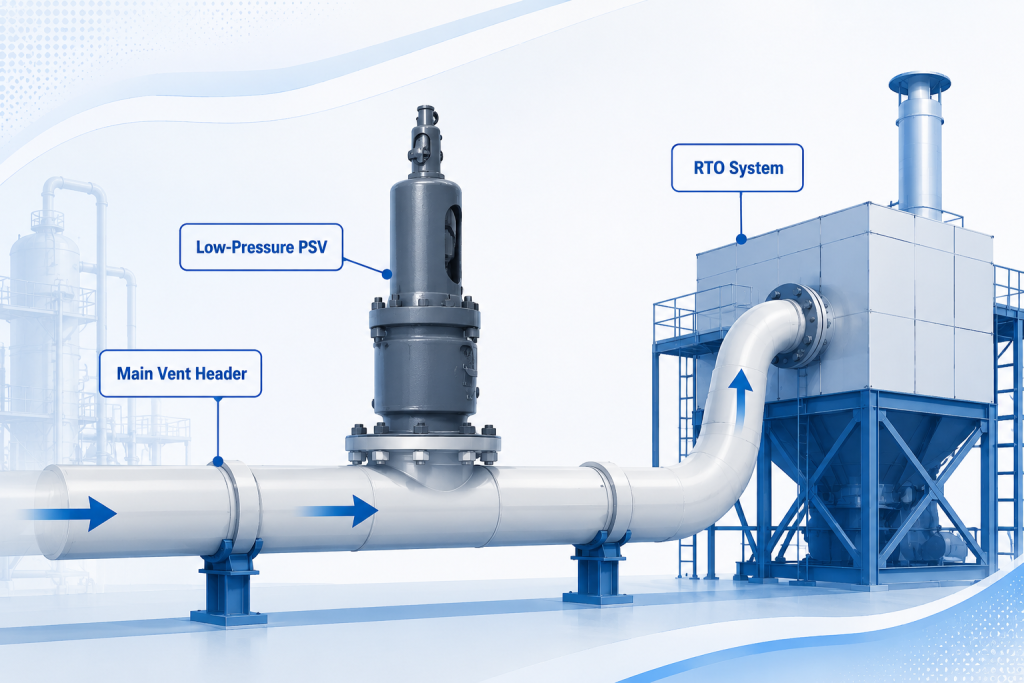
A customer approached EFSVALVES with a demanding Pressure Safety Valve (PSV) application for a main vent header connected to an RTO system.
At first sight, the enquiry did not appear extreme. The service pressure was low, the medium was gas, and the process was not a conventional high-pressure vessel.
The real challenge was different: how to define a suitable relief solution capable of handling a significant gas flow at very low pressure, while maintaining reliable tight shut-off in a process connected to downstream equipment.
This is the kind of service where standard safety valve selection may not be enough. The final concept must be reviewed together with the process conditions, the downstream pressure profile, the sealing requirement and the documentation needs of the project.
Project Background
The application involved a gas venting line connected to an RTO unit. The service combined several relevant factors:
- main vent header to RTO system
- gas service, nitrogen with VOC traces
- very low operating pressure
- high gas flow requirement
- tight shut-off requirement
- sensitivity to downstream pressure conditions
- inspection, testing and project documentation requirements
The customer needed more than a catalogue item. The duty required a PSV concept adapted to the real behaviour of the process.
The Engineering Challenges
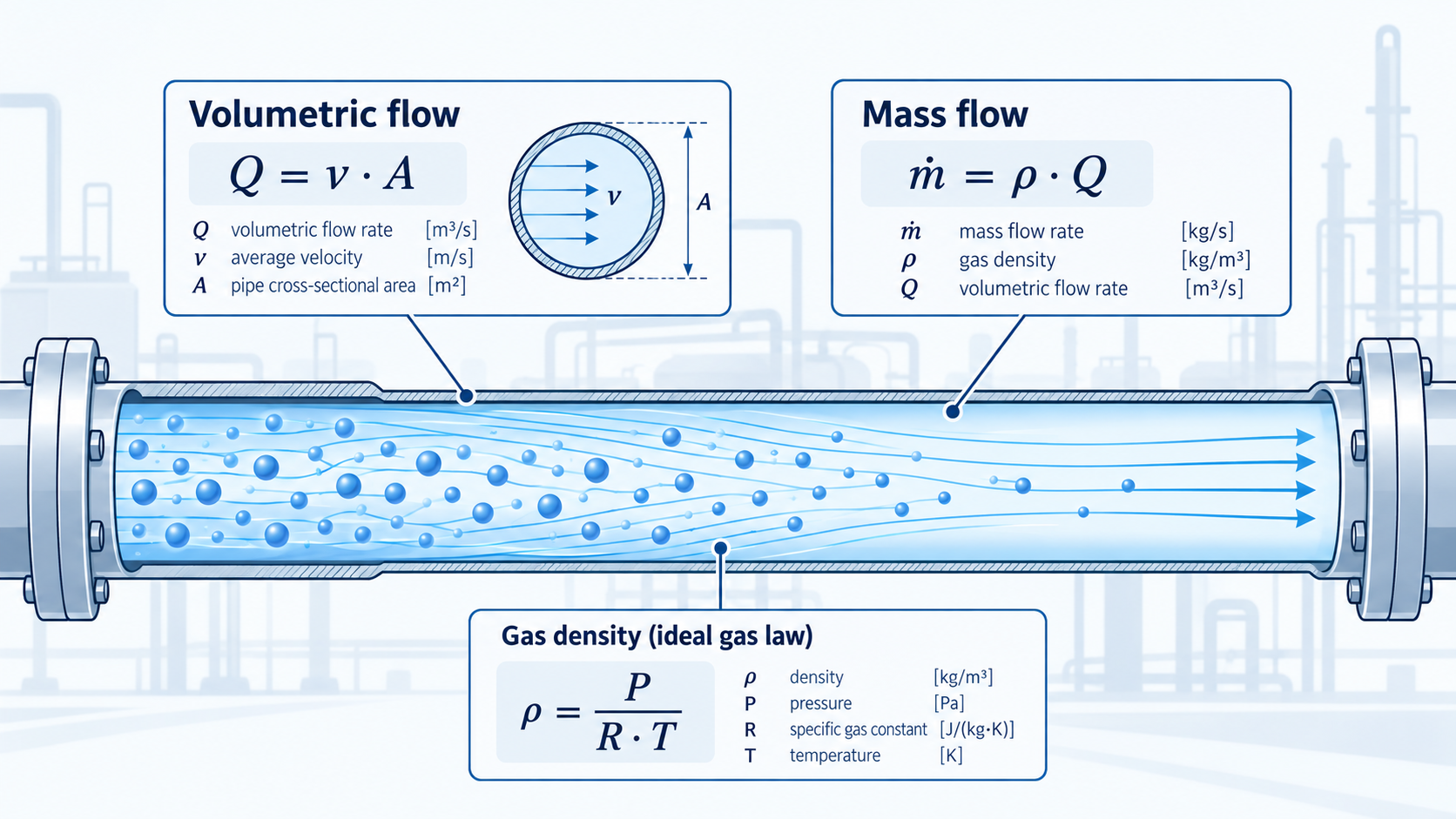
In low-pressure gas relief duties, the difficulty is often hidden. The pressure may be low, but the volumetric flow can be significant. With limited available pressure differential, the required flow area grows, and the equipment must operate in a stable and predictable way.
| Challenge | Engineering relevance |
|---|---|
| High flow at very low pressure | The combination of gas flow, density, available pressure differential and system losses becomes critical. |
| Tight shut-off | Small leakage through the safety valve can affect emissions control, process stability, inerting strategy or plant operation. |
| Possible downstream interaction | An RTO system may introduce pressure variations, induced draft, start-up conditions, shutdown sequences or transient scenarios. |
| Safety relief stability | Low set pressure, high gas flow, inlet losses and downstream interaction can all affect safety relief valve behaviour. |
The objective was not only to provide enough relieving capacity, but to define a technically coherent solution for a demanding low-pressure gas scenario.
EFSVALVES Approach
EFSVALVES reviewed the enquiry as a complete project, not simply as a valve request.
The work focused on understanding the full context: what type of process was being protected, what gas flow had to be relieved, why tight shut-off was important, whether downstream equipment could influence PSV behaviour, and what inspection, testing and documentation requirements the project would need.
This approach is especially relevant in niche pressure relief applications, where the customer needs not just a manufacturer but a technical partner capable of understanding the process and managing the project around the supply.
Proposed Concept And Project Execution
EFSVALVES proposed a large-diameter, low-pressure safety valve solution adapted to the high-flow gas service.
The concept considered:
- large relieving capacity at very low set pressure
- tight shut-off performance for the VOC-bearing gas service
- robust body design
- full project documentation support
Depending on project requirements, EFSVALVES can coordinate set pressure testing, seat tightness verification, final dimensional and visual inspection, Inspection and Test Plan support, material certificates, technical datasheets, drawings and vendor documentation management.
Engineering Takeaway
Low pressure does not always mean simple PSV engineering.
When a process combines low pressure, high gas flow, tight shut-off and possible downstream interaction in vent headers, RTO systems, VOC treatment lines, flare or scrubber connections, vacuum-related systems or low-pressure gas networks, the selection must be reviewed carefully.
The better question is not only «which safety valve size is required?» but «how will the pressure relief valve behave in the real process?»
In complex pressure relief duties, the valve is only part of the solution. Understanding the process, the documentation requirements and the inspection needs is what makes the difference.
Work With EFSVALVES On Your Next PSV Application
If your process combines low pressure, high gas flow, tight shut-off or complex documentation requirements, send us your datasheet. Our team can review the relief scenario and help define the most suitable technical approach.