Rupture discs and safety valves are both used to protect pressurized equipment, piping and vessels from overpressure. They are often discussed together because they can serve the same protection objective, but they do not work in the same way.
A safety valve is a reclosing mechanical device. It opens when the set pressure is reached, relieves flow, and then closes again when pressure returns to a safe level. A rupture disc is a non-reclosing pressure relief device. It opens by bursting at a defined pressure and must be replaced after activation.
Choosing between them is not only a matter of cost or preference. The right choice depends on leakage requirements, response time, corrosion, maintenance philosophy, process stability, applicable standards and whether the device must reclose after the event.
Need support with a real protection case? EFSVALVES can help review the process data, applicable code basis and device arrangement before defining the most suitable solution.
Quick comparison
| Criterion | Rupture Disc | Safety Valve |
|---|---|---|
| Operating principle | Non-reclosing device that opens by bursting | Reclosing valve that opens and reseats mechanically |
| Leak tightness before activation | Excellent option for zero leakage requirements | Depends on seat design, condition and service |
| Response | Very fast full-bore opening | Fast opening, with behavior depending on valve type and service |
| After activation | Must be replaced | Can close again if not damaged or fouled |
| Maintenance | Minimal moving parts; inspection and replacement after burst | Requires inspection, testing and maintenance of moving parts |
| Corrosive or fouling media | Often preferred or used as an isolation barrier | May require special materials, protection or higher maintenance |
| Typical standards | ISO 4126-2, ASME Section VIII, PED where applicable | ASME Section VIII, API 520, API 526, EN ISO 4126 where applicable |
What is a rupture disc?
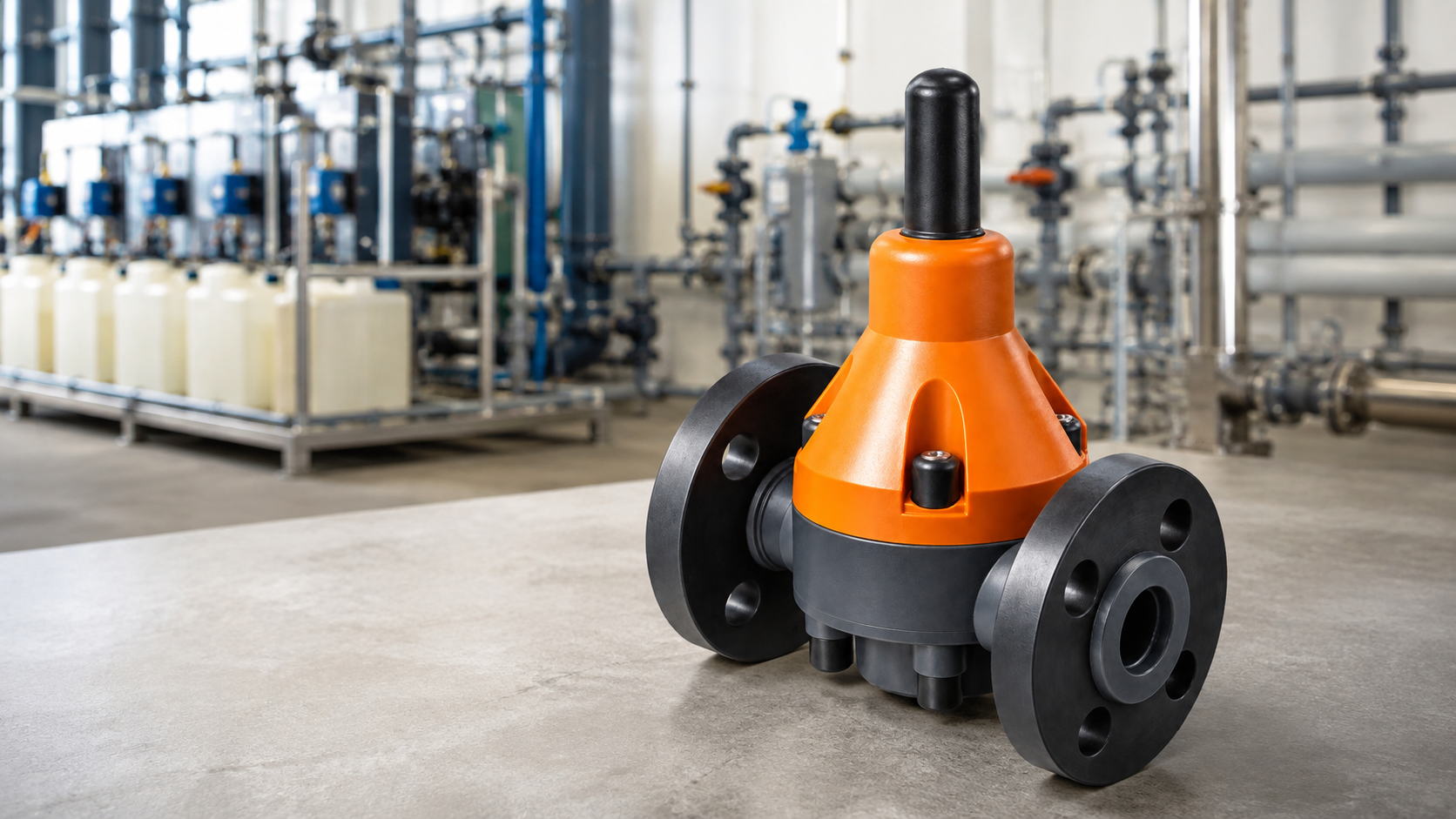
A rupture disc is a pressure relief device designed to burst at a specified pressure and temperature. When it opens, it provides a rapid full-bore relief path. Because it has no moving parts and no seat leakage path, it is often selected where tightness, fast response or corrosion resistance are critical.
Rupture discs are available in several design families, including forward-acting, reverse buckling, composite, graphite and compact fitting connection configurations. In the EFSVALVES range, selector families such as EFKSRBK, EFKSRSF, EFKSRC, EFKSRGM and EFKSRRK help start the selection process before the final configuration is defined through engineering review.
The main trade-off is simple: after a rupture disc bursts, it does not reclose. The system must be isolated and the disc replaced before returning to normal operation.
What is a safety valve?
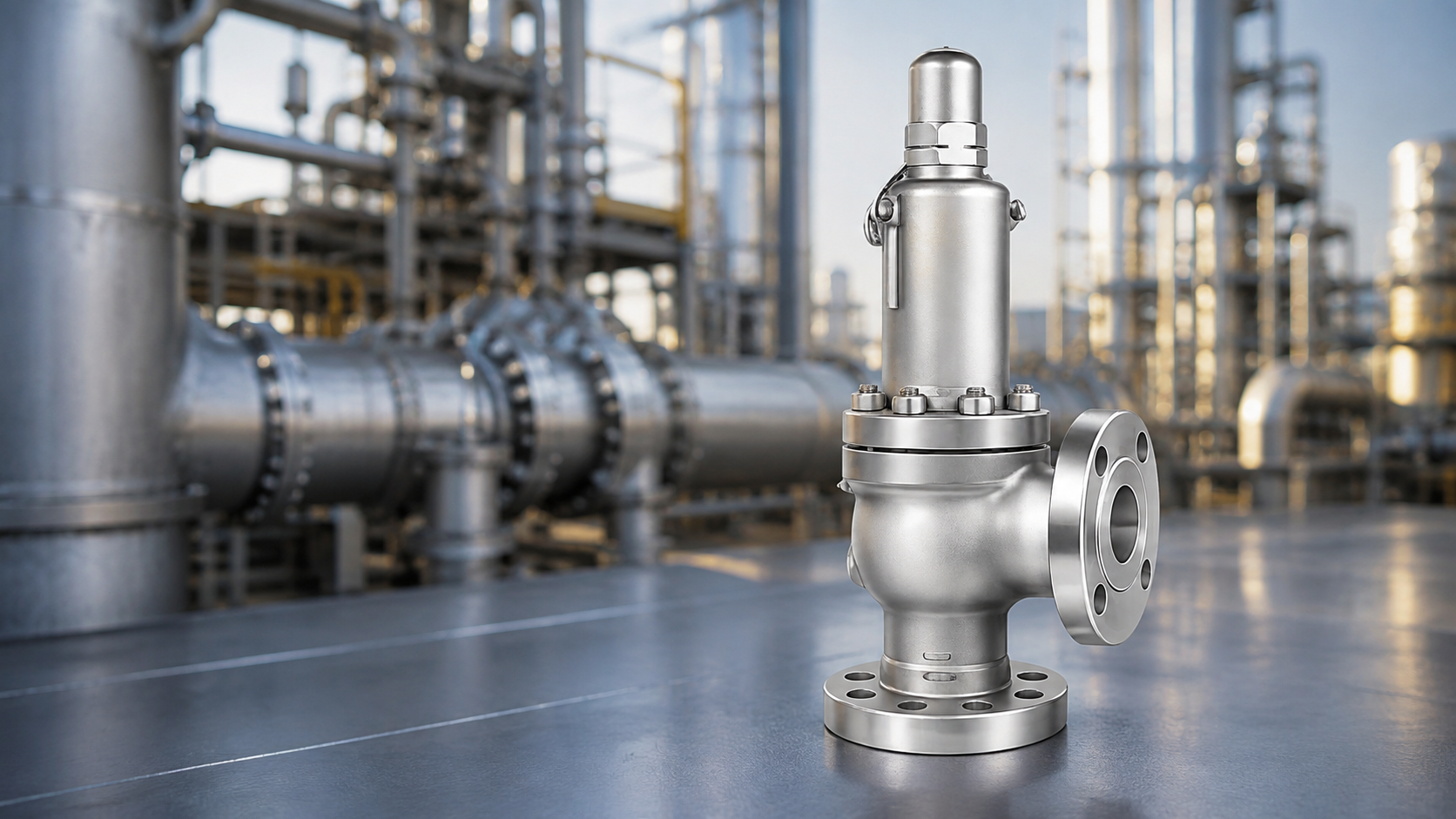
A safety valve is a reclosing pressure relief device. It is designed to open when pressure reaches the set point, discharge enough flow to protect the equipment, and then reseat when pressure falls to an acceptable level.
Safety valves are especially common in steam, gas and compressible-fluid services where code-compliant pressure protection is required and the system must be able to recover after a relief event. EFSVALVES pressure safety valve families such as EF1216 and EF1415 are used as starting points for selection according to connection, material, pressure range, service and applicable standards.
The trade-off is that a safety valve has moving parts and a sealing surface. In clean and suitable service, this is not a problem. In corrosive, fouling or sticky media, the valve may need additional protection or maintenance.
When should you use a rupture disc instead of a safety valve?
A rupture disc is often the preferred solution when the process requires zero leakage, very fast response or strong resistance to corrosion and fouling.
Use a rupture disc when:
- Zero leakage is required before activation
- Very fast response and full-bore opening are needed
- The medium is corrosive, sticky, polymerizing or fouling
- The application benefits from minimal maintenance
- A simple passive device is preferred for the protection philosophy
- Cost optimization is important and a non-reclosing device is acceptable
Rupture discs are also used when the protected equipment must be isolated from a safety valve, discharge header or corrosive atmosphere. In these cases, the rupture disc acts as a barrier and helps preserve the valve or protected equipment.
When should you use a safety valve instead?
A safety valve is usually the starting point when the system needs a device that can open and then reclose after the pressure event. This is important when the process should continue operating, or when immediate shutdown and replacement of a burst element is not acceptable.
Use a safety valve when:
- The device must reclose after relieving pressure
- The service is clean enough for reliable valve operation
- The system handles steam, gas or other services covered by valve-based code requirements
- Periodic testing, inspection and maintenance can be managed
- The process design expects controlled reseating after an overpressure event
Safety valves are common on boilers, pressure vessels, gas systems, compressed air receivers and many industrial process units.
Can rupture discs and safety valves be used together?
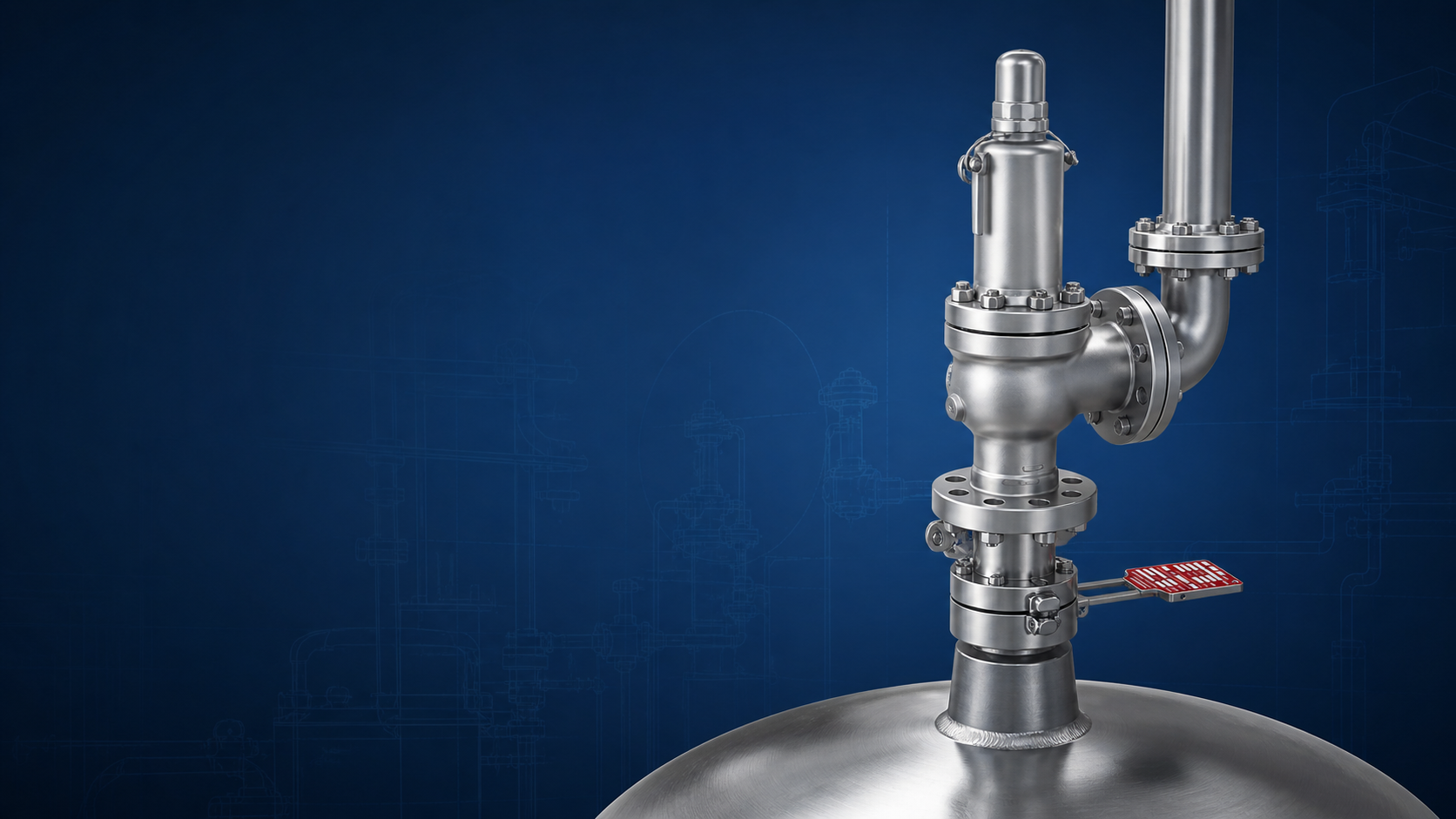
Yes. This is one of the most common and useful arrangements in pressure protection design. A rupture disc and a safety valve can be combined to improve tightness, protect the valve or separate the process from external conditions.
Rupture disc upstream of the safety valve
When installed upstream of the safety valve, the rupture disc sits between the process and the valve inlet. This arrangement is often used to protect the valve from corrosive, fouling or polymerizing media.
Typical reasons include:
- Preventing corrosion of the safety valve internals
- Reducing leakage through the safety valve seat
- Keeping sticky or fouling media away from moving parts
- Extending safety valve service life
This arrangement must be engineered carefully. The space between the rupture disc and the safety valve may require monitoring or pressure management, because pressure accumulation between the two devices can affect the burst behavior of the disc.
Rupture disc downstream of the safety valve
When installed downstream of the safety valve, the rupture disc can help isolate the valve outlet from corrosive discharge headers, aggressive atmospheres or external contamination.
Typical reasons include:
- Protecting the safety valve outlet side
- Reducing exposure to corrosive downstream conditions
- Helping isolate the valve from a common discharge system
- Managing contamination risks in sensitive applications
Backpressure and discharge conditions must be reviewed. Incorrect assumptions can affect both the rupture disc and the safety valve.
Forward-acting vs reverse buckling rupture discs
One of the first rupture disc selection questions is whether the design should be forward-acting or reverse buckling.
A forward-acting rupture disc is tension-loaded. It bursts when pressure stretches the disc beyond its defined limit. These designs are simple and widely used, but may be less suitable for severe cycling or high operating ratios depending on the exact configuration.
A reverse buckling rupture disc is compression-loaded. The disc is installed with its dome facing the process pressure and reverses at the defined burst condition. Reverse buckling designs are often preferred for demanding industrial applications because they can offer better cycling resistance and operating stability.
The final choice depends on burst pressure, operating pressure, temperature, vacuum conditions, service phase and required operating ratio.
Key data needed to select a rupture disc
A good rupture disc RFQ needs more than a nominal pipe size. The final configuration depends on both the burst condition and the normal operating condition.
Important data includes:
- Fluid name and service phase: gas, vapour, liquid or two-phase
- Required burst pressure
- Burst temperature
- Normal operating pressure and temperature
- Nominal size or required relieving capacity
- Vacuum condition
- Cycling or pulsating service
- Fragment-free requirement, if applicable
- Holder or connection type
- Disc material and corrosion compatibility
- Required certificates and documentation
This is why the RFQ stage is critical. A rupture disc can look simple, but the wrong selection can lead to premature bursting, leakage, fatigue or insufficient relief capacity.
Key data needed to select a safety valve
A safety valve RFQ also requires complete process data. The most important parameters include set pressure, relieving pressure, required capacity, backpressure, fluid phase, temperature, inlet and outlet size, connection type, material and applicable code basis.
For PSV selection, standards such as ASME Section VIII, API 520, API 526 or EN ISO 4126 may influence sizing, allowable overpressure, materials, certification and documentation requirements.
If the valve is combined with a rupture disc, the combined arrangement must be evaluated as a system rather than as two independent devices.
Common selection mistakes
Pressure protection problems often come from incomplete data or from treating rupture discs and safety valves as interchangeable devices.
Common mistakes include:
- Selecting only by line size without checking relieving capacity
- Ignoring operating pressure ratio and cycling conditions
- Forgetting vacuum conditions
- Ignoring backpressure on the outlet side
- Using an unsuitable material for corrosive media
- Installing a rupture disc with the wrong holder or orientation
- Combining a rupture disc and safety valve without reviewing the space between them
Which one is better?
Neither device is universally better. A rupture disc is usually better when the priority is tightness, corrosion resistance, fast full opening, simple construction or valve isolation. A safety valve is usually better when the priority is reclosing after the relief event and maintaining protection without immediate replacement.
In many industrial systems, the best answer is not one device or the other, but a properly engineered combination of both.
Practical selection guide
| Application need | Likely starting point |
|---|---|
| Zero leakage before activation | Rupture disc |
| Device must reclose after relieving | Safety valve |
| Corrosive or fouling service | Rupture disc or rupture disc upstream of PSV |
| Steam or gas code-compliant pressure relief | Safety valve, with code review |
| Protect safety valve from process media | Rupture disc upstream of PSV |
| Protect valve outlet from discharge header or atmosphere | Rupture disc downstream of PSV, with backpressure review |
| Highly cyclic operation | Review reverse buckling disc or suitable safety valve solution |
How EFSVALVES can support selection
EFSVALVES supports both rupture disc and pressure safety valve selection. For rupture discs, the selection starts with families such as EFKSRBK, EFKSRSF, EFKSRC, EFKSRRL, EFKSRGM and EFKSRRK, then moves into the RFQ data needed to define the final disc, holder, material and accessories.
For pressure safety valves, product families such as EF1216 and EF1415 support overpressure protection requirements across different connections, materials, pressure ranges and code bases.
If you are deciding between a rupture disc, a safety valve or a combined arrangement, the safest starting point is to review the complete pressure protection case: fluid, pressure, temperature, capacity, backpressure, corrosion, maintenance philosophy and applicable standards.