A project specification asks for stainless steel with Wp > 60, or alternatively internal lining. Another project mentions PREN > 40 for seawater service. A third one simply says superduplex required.
Are these requirements asking for exactly the same thing? Not always. But they all point to the same engineering concern: avoiding localized corrosion on the wetted parts of the valve.
In seawater, desalination, reverse osmosis, fertilizers and chemical process applications, material selection is not only a matter of choosing «stainless steel». Two valves may look almost identical from the outside. Both may be described as stainless steel. Both may even be suitable for general industrial use.
However, when exposed to chlorides, brine, seawater or aggressive process fluids, their behavior can be completely different.
PREN, Wp and pitting corrosion factor are not commercial labels. They are specification clues that help identify when a standard stainless steel valve may not be enough for the service.
This is where PREN, Wp and pitting corrosion factor become useful. They help engineers, buyers and project teams understand why 316L, 904L, duplex, superduplex and PTFE/PFA lined valves should not be treated as equivalent solutions.
Why Pitting Corrosion Matters In Valves
Pitting corrosion is a localized form of corrosion that creates small cavities or holes on the surface of a metal. In stainless steels, it is especially relevant in environments containing chlorides, such as seawater, brine, desalination plants, reverse osmosis systems or certain chemical processes.
The problem with pitting corrosion is that it can be difficult to detect at an early stage. A component may look acceptable externally, while localized attack is developing on internal wetted surfaces.
In valves, this risk is particularly important because there are many areas where corrosion can start or accelerate:
- body cavities
- seats and sealing areas
- balls, plugs, discs or needles
- trims and stems
- internal dead zones
- threaded areas
- crevices between components
- areas with stagnant fluid
- surfaces exposed to high chloride concentration
For this reason, pitting corrosion in valves should not be seen only as a theoretical material issue. It is closely connected to real valve geometry, wetted parts and service environment.
What Is PREN?
PREN means Pitting Resistance Equivalent Number.
It is an empirical index used to compare the relative resistance of stainless steels and related alloys against pitting corrosion. It is mainly based on the chemical composition of the alloy.
This is the most common expression used to compare pitting resistance in stainless steels.
PREN = %Cr + 3.3 x %Mo + 16 x %N| Element | Contribution to pitting resistance |
|---|---|
| Chromium (Cr) | Contributes to the passive layer that protects stainless steel. |
| Molybdenum (Mo) | Improves resistance against chloride-induced corrosion. |
| Nitrogen (N) | Increases pitting resistance and supports mechanical performance in duplex and superduplex steels. |
In some alloys, especially those containing tungsten, a modified formula may be used:
For alloys where tungsten is considered, some specifications use a modified expression.
PREW = %Cr + 3.3 x (%Mo + 0.5 x %W) + 16 x %NThe higher the PREN or PREW value, the higher the theoretical resistance to pitting corrosion, assuming the material has been correctly manufactured and applied in suitable service conditions.
However, PREN should not be understood as an absolute guarantee. It is a comparison tool, not a complete material selection method.
PREN, PRE, PREW, Wp And Pitting Corrosion Factor
Different specifications may use different terms for similar concepts.
| Term used in specifications | Practical meaning |
|---|---|
| PREN | Pitting Resistance Equivalent Number. |
| PRE | Shorter version often used for the same concept. |
| PREW | PREN formula including tungsten contribution. |
| Wp | Pitting corrosion factor used in some specifications. |
| Pitting corrosion factor | Generic requirement related to resistance against pitting corrosion. |
Although the terminology may vary, the engineering concern is usually the same: ensuring that the metallic surfaces exposed to the fluid have sufficient resistance against localized corrosion.
For example, a specification may state that stainless steel with a certain pitting corrosion factor is acceptable, while materials below that threshold require internal lining. In practice, this means the designer wants either a sufficiently corrosion-resistant metallic material or a protective barrier between the fluid and the metal.
PREN is not the final answer. It is the starting point for asking the right material-selection questions.
Typical PREN Values For Common Valve Materials
The following values are approximate and should be used only as an orientation. The real PREN value should be calculated from the actual chemical composition of the supplied material.
| Material family | Typical examples | Approximate PREN range | Practical interpretation |
|---|---|---|---|
| Standard austenitic stainless steel | AISI 304, CF8 | 18-20 | Limited resistance in chloride-rich environments. |
| Molybdenum-bearing stainless steel | AISI 316, 316L, CF8M, CF3M | 23-27 | Better than 304, but not always enough for seawater or demanding chloride service. |
| High-alloy austenitic stainless steel | AISI 904L | 34-36 | Useful in some corrosive services, depending on fluid and operating conditions. |
| Duplex stainless steel | 2205, F51 | 34-38 | Good balance between corrosion resistance and mechanical strength. |
| Superduplex stainless steel | 2507, F53, F55, A890 5A, A995 5A | 40-43+ | Frequently specified for seawater, desalination and severe chloride applications. |
| Superaustenitic / 6Mo alloys | 254 SMO and similar alloys | 42-46+ | High corrosion resistance, usually with higher cost and longer availability constraints. |
| PTFE / PFA lined construction | PTFE lined valves, PFA lined valves | Not applicable as metallic PREN | The chemical barrier is provided by the lining, not by the metallic body. |
This table helps explain why a generic «stainless steel valve» is not always enough. A 316L valve and a superduplex valve may both be stainless steel, but their resistance to pitting corrosion can be very different.
Why 316L Is Not Always Enough
AISI 316L is widely used in industrial valves and performs well in many applications. It contains molybdenum, which gives it better resistance to chloride corrosion than 304 stainless steel.
However, in seawater, brine, desalination systems or aggressive chloride environments, 316L can reach its limits. This is especially true when chloride concentration is high, temperature increases, fluid remains stagnant or crevices are present.
In valve applications, these conditions are not unusual. Internal cavities, seat areas and narrow spaces can create local conditions that are more severe than the general process fluid might suggest.
This is one reason why specifications may request materials with higher PREN values, such as 904L, duplex or superduplex stainless steels.
Why Superduplex Is Often Specified For Seawater And Desalination
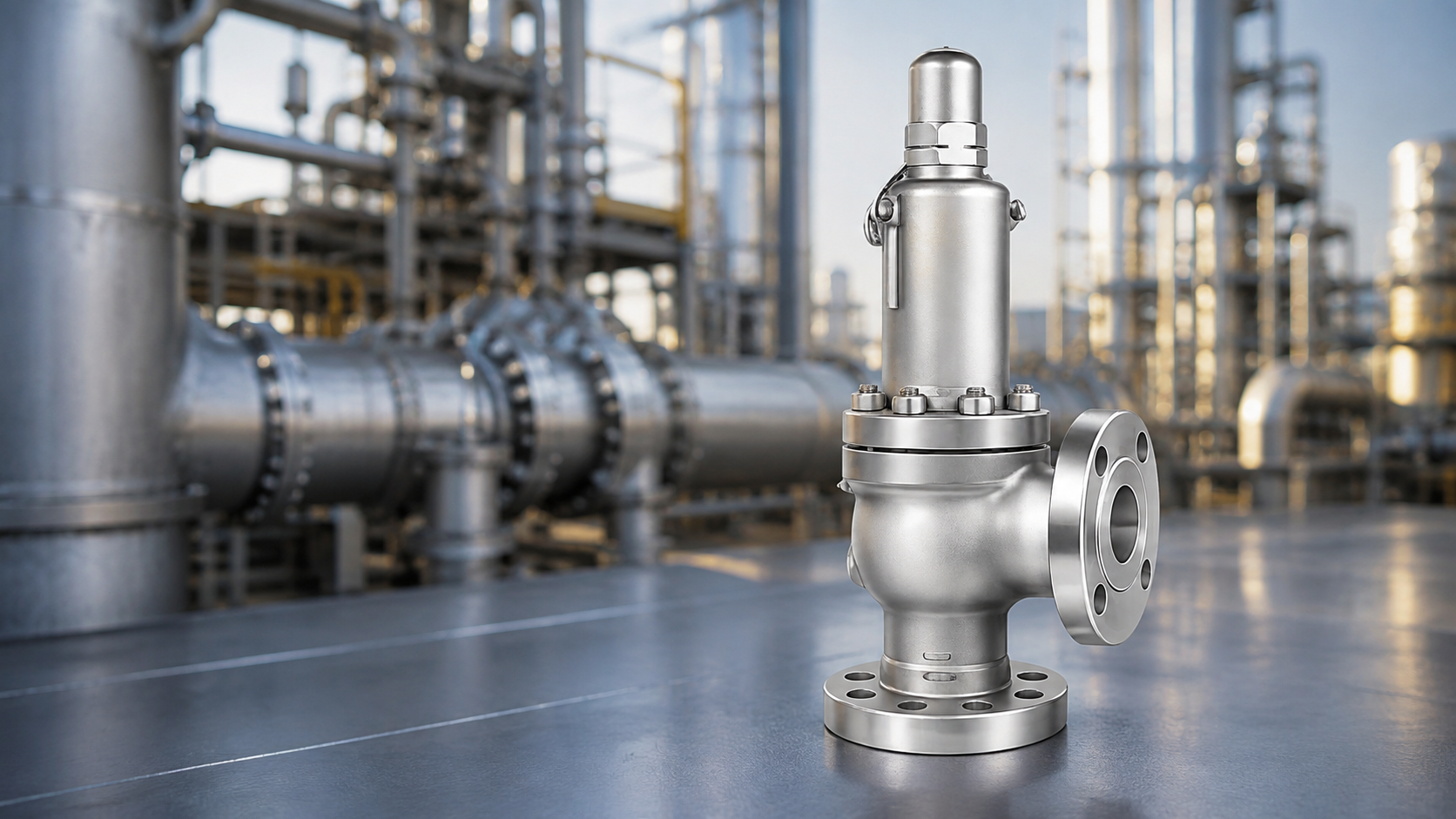
Superduplex stainless steels are strongly associated with PREN requirements because they combine high chromium, molybdenum and nitrogen contents. This gives them a much higher pitting resistance than standard stainless steels such as 304 or 316L.
In addition to corrosion resistance, superduplex materials offer high mechanical strength. This can be particularly useful in:
- seawater systems
- desalination plants
- reverse osmosis skids
- high-pressure water applications
- chemical dosing systems
- instrumentation lines
- offshore and marine environments
- chloride-rich process fluids
For valve applications, materials such as F53, F55, A890 5A or A995 5A are often considered when the service requires both corrosion resistance and mechanical performance.
Superduplex is not selected only because of a number in a formula. It is selected because chloride exposure, pressure level, valve function and wetted geometry may require a more robust material solution.
Where 904L Can Make Sense
AISI 904L is a high-alloy austenitic stainless steel with better corrosion resistance than standard 316L in many environments. It can be an interesting option when 316L appears insufficient but the project does not necessarily require superduplex or higher alloys.
904L may be considered in certain chemical, acidic or chloride-containing services, depending on the real process conditions.
However, 904L should not be treated as a universal substitute for superduplex. The decision between 904L, duplex, superduplex or a lined construction must be based on the operating conditions and on the valve areas exposed to the fluid.
When PTFE/PFA Lined Valves Are A Smarter Alternative
Strictly speaking, PREN does not apply to PTFE/PFA lined valves, because the corrosion barrier is not the metallic alloy but the lining.
However, lined constructions often appear in the same technical discussions because some specifications allow either a sufficiently resistant metallic material or an internal protective lining.
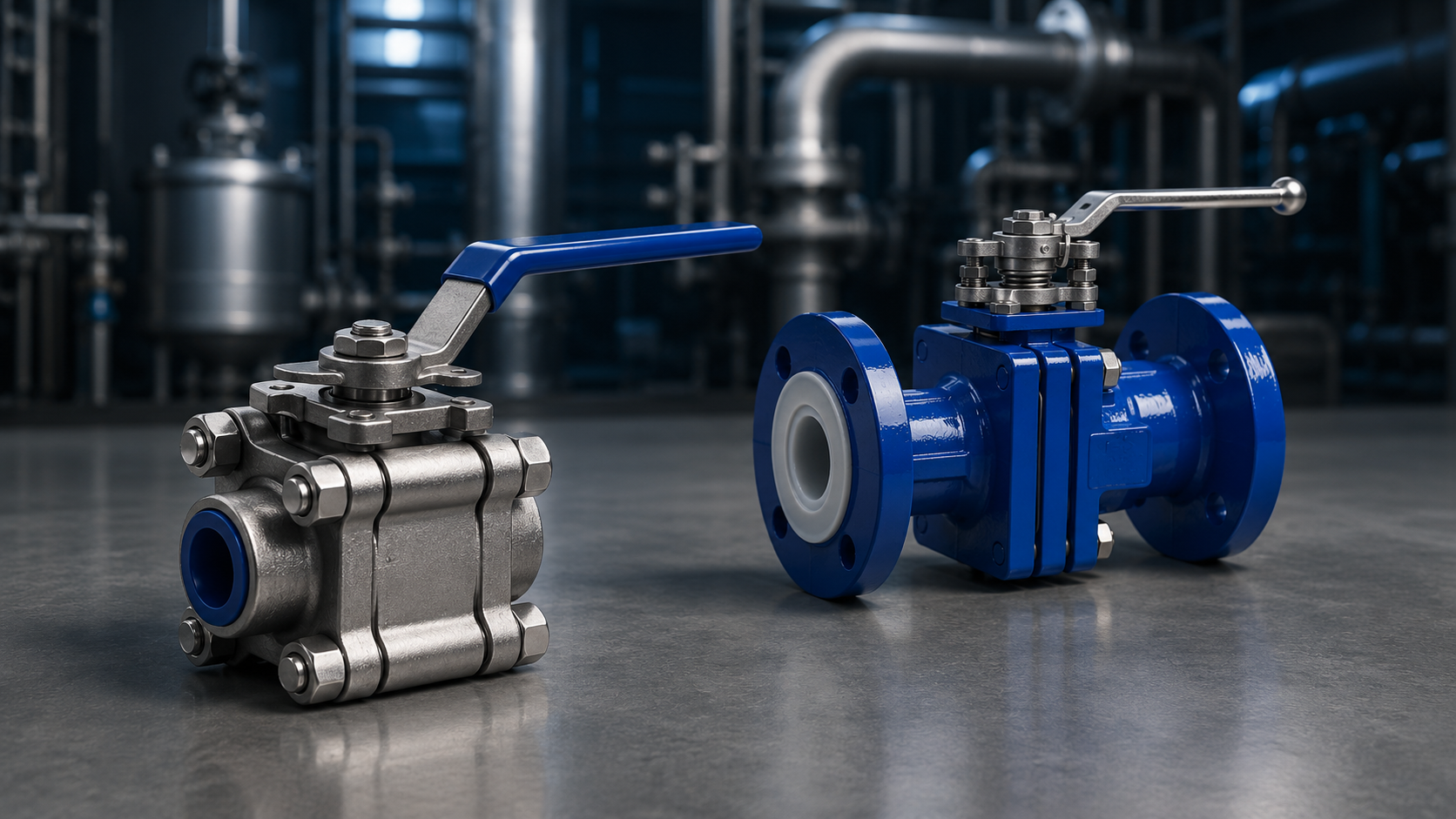
In highly corrosive fluids, a valve with internal PTFE or PFA lining can separate the process fluid from the metallic body. In this case, corrosion resistance is mainly provided by the lining material rather than by the PREN of the metal.
| Higher PREN metallic construction | PTFE/PFA lined construction |
|---|---|
| Often relevant for chloride-induced pitting on metallic wetted parts. | Often relevant when chemical compatibility and barrier protection are the primary concern. |
| Typical examples include duplex, superduplex and superaustenitic alloys. | Typical examples include PTFE lined and PFA lined valves. |
| Selection is strongly linked to alloy chemistry and real service conditions. | Selection is strongly linked to lining continuity, pressure, temperature and media compatibility. |
This approach can be especially relevant in chemical process plants, fertilizer production, acid services, aggressive liquid media and applications where exotic alloys would be expensive or difficult to source.
In simple terms: when the problem is chloride-induced pitting on metallic surfaces, a higher PREN material may be the answer. When the problem is aggressive chemical attack, a lined valve may be the smarter construction.
Beyond The Number: PREN Is Only Part Of The Decision
PREN is a useful comparative index, but it should not be read as an isolated guarantee. It helps compare the theoretical pitting resistance of different stainless steels, but it does not replace a proper review of the material grade, the exposed metallic surfaces and the actual service conditions.
This is especially important in valve applications, where the fluid may be in contact with different wetted parts such as the body, trim, ball, plug, disc, stem or internal components.
In demanding projects, the specified material grade should be supported by appropriate material documentation and chemical composition. When required, additional checks such as PMI can help confirm that the supplied alloy corresponds to the specified material.
How To Read A Specification Mentioning PREN Or Wp
When a technical specification includes PREN, Wp or pitting corrosion factor, it is usually trying to prevent one of three risks:
- Using a stainless steel that is too basic for the service.
- Leaving internal wetted surfaces exposed to corrosion.
- Selecting a material by name without checking its real corrosion resistance.
A good reading of the specification should therefore consider both the number and the application.
| Specification clue | Possible engineering response |
|---|---|
| Seawater or desalination service | Superduplex may be a logical candidate, depending on pressure, temperature and valve design. |
| Chemical fluid with strong corrosive attack | PTFE/PFA lined valves may be more suitable than relying only on metallic PREN. |
| Moderately corrosive service | 904L or duplex may be considered depending on chloride level and operating conditions. |
| Lining required below a certain Wp value | The specification is asking for corrosion protection either by material selection or internal barrier protection. |
The engineering decision is not only «which material has the highest PREN?» but «which valve construction is technically suitable for this service?»
Conclusion
PREN, Wp and pitting corrosion factor are useful tools for understanding corrosion-resistant material selection. They help explain why 316L, 904L, duplex, superduplex and lined valves cannot be treated as equivalent solutions.
In seawater, desalination and chloride-rich environments, a valve must be selected by considering the complete application: fluid, chloride content, temperature, pressure, internal geometry, wetted parts, material grade and valve construction.
Superduplex stainless steels are often specified because they offer high pitting resistance and strong mechanical performance. 904L can be useful in certain intermediate corrosive services. PTFE/PFA lined valves can be the smarter solution when chemical compatibility and internal barrier protection are more important than the PREN of the metallic body.
In other words, PREN is an excellent starting point, but the correct valve solution depends on engineering judgement and real service conditions.